
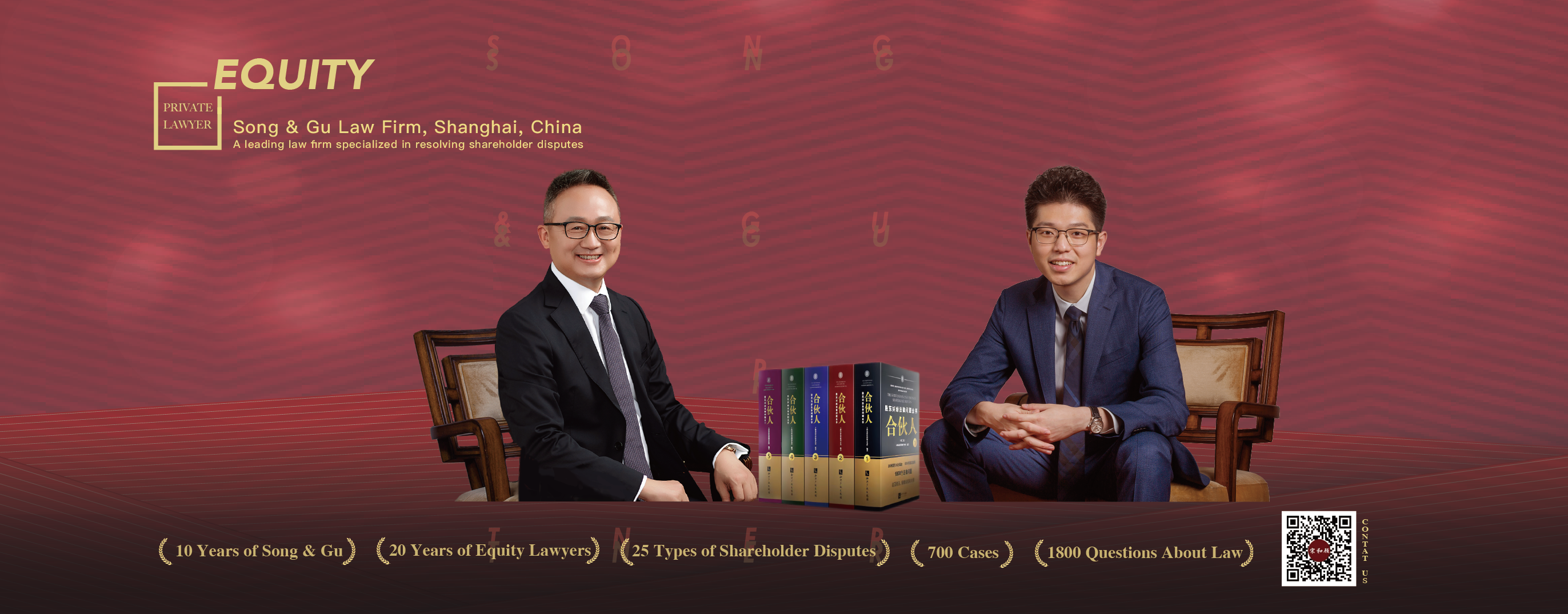

This supplement integrates the 2024 Company Law alongside our practical experience handling all causes of action in shareholder disputes, systematically adding and analysing over 2,399 critical litigation considerations and referencing 1,000 related cases. The publication comprises two volumes with a total of 1.2 million Chinese characters. When cross-referenced with the foundational five-volume 2022 edition, this supplement enables readers to gain insight into the 'changes' and 'constants' of the new Company Law, offering a rigorous framework for understanding substantive amendments whilst maintaining continuity with established jurisprudence.

After a decade of devotion and continuous reprinting, this book has been immensely privileged to receive 100%, 97%, and five-star ratings from readers across Dangdang, JD, and Amazon respectively. Grounded in the study of nearly 10,000 shareholder dispute cases, we have systematically collated our practical experience across all types of these disputes. The book covers 25 categorised causes of action, extracting 700 real-world cases and 1,800 legal questions, whilst extending into related legislation such as tax and marriage law. Since its initial publication in 2014, the work has expanded from its original three volumes to the current seven. Its ever-growing volume serves one singular purpose: to present the most cutting-edge and highly practical judicial viewpoints and hands-on experience in the field of shareholder disputes available today.

This book breaks through a single set of legal thinking as it systematically analyzes how non-listed companies formulate and implement equity incentives from multiple perspectives such as human resource management, economics, and psychology. Through analyzing domestic well-known cases and integrating big data, evidence and theory, it reveals the conditions, risk control and operation steps of non-listed companies to formulate and implement equity incentives, and proposes the methodology and solutions suitable for non-listed companies' equity incentives.

This is an "old" book and is the first book that fully elaborates on the legal issues and practices involved in all aspects of state-owned property rights transactions after the implementation of “the Interim Measures for the Administration of State-owned Property Rights Transfer” law. With details on the procedures, steps and practical points of the state-owned enterprises property rights transfer, it shall guide the lawyers to operate on those projects.

This 'map book' presents the judicial standards for 25 types of shareholder disputes in a mind map format. The book covers the procedural aspects, trial requirements, and challenges of each type of dispute in practice. It includes guiding cases from the Supreme People's Court, publicized cases, and cases archived by the People's Courts. This book serves as an introductory guide for legal professionals to quickly familiarize themselves with different shareholder disputes. It also acts as an index and overview of the Guidelines on Legal Issues of Shareholder Disputes.

This book serves as a streamlined 'statute of limitations checklist' that cuts through the complexity. Grounded in our real-world litigation experience, it focuses primarily on the statute of limitations across 29 categories of shareholder dispute cases. The book covers all causes of action in shareholder disputes, addressing key questions: Which are subject to the statute of limitations? Which are exempt? Which depend on the specific circumstances of the case? And which are governed by exclusion periods? How should the starting points for both the statute of limitations and exclusion periods be determined? What are the main controversies and classic precedents regarding time limits for each cause of action in judicial practice? On all these fronts, this book provides clear guidance.

This book is based on a real case, and it provides a comprehensive view of the chain of events triggered by shareholder dispute litigation. It guides readers through the entire process of shareholder disputes, from filing the case to litigation and negotiation. This book systematically organizes practical experiences of Song and Gu, and transforms them into a transferable, structured legal thinking model. It teaches readers how to evaluate the strengths and weaknesses of both parties, and appropriately apply litigation negotiation strategies to control the overall situation of the case.

This book is a revised version of Redefining Equity Incentives. It updates reformed legislations including Civil Code and Company Law, and specifically focuses on the legal aspects of corporate governance and shareholder disputes, along with judicial practices. From the perspective of business management, it further explores how companies at different stages apply and focus on equity incentives. Additionally, by combining real cases handled in recent years and the latest data available, the book provides new insights, experiences, and lessons on the key elements in equity incentive plans: Target Audience, Pricing and Valuation, Award Types, Vesting Schedules, and Adjustment Plan.

This book uses a real case to guide readers on how to interpret the taxation of equity transactions from an economic perspective. It also provides an insight about the legal strategies in tax-related cases, and how to navigate complex legal relationships involving civil law, administrative law, criminal law, and more. It demonstrates how to simplify and turn the situation around when facing the pressure from multiple parties.

This book focuses on reflecting the principles of s corporate governance by comparing it to shareholder disputes. This is also the primary method of our work. This book starts with shareholder dispute cases and delves into various scenarios of shareholder conflicts: control, loss of control, and suppression. It deeply reflects on common problems in corporate governance practices and ultimately introduces the three pillars of corporate governance: information disclosure, rules of procedure, and withdrawal mechanisms. The book discusses how these can optimize corporate governance and help prevent shareholder disputes.

